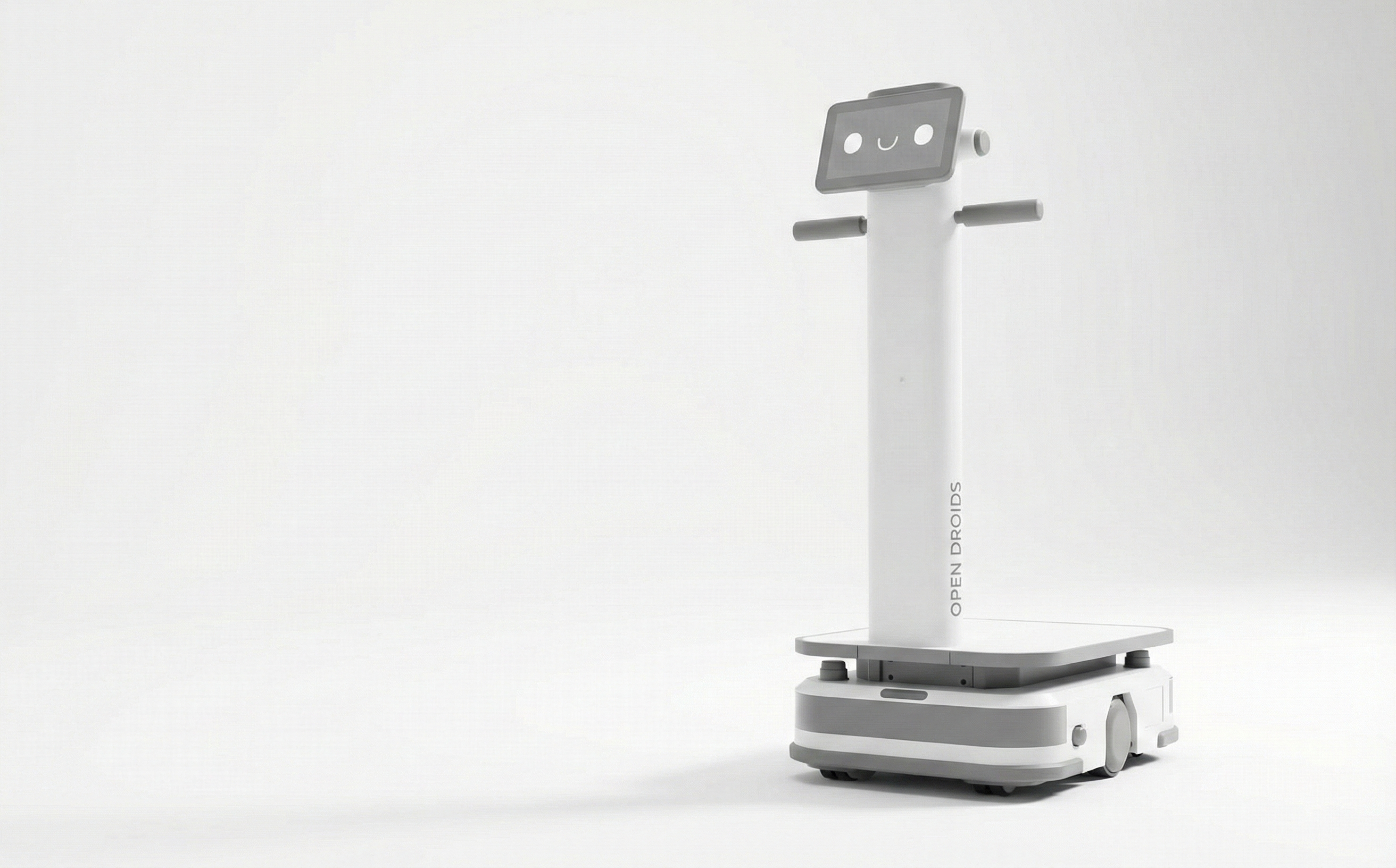
Comparison · Restaurant Robots
Pudu BellaBot vs OpenDroids — Full Comparison (2026)
Following the FCC's July 28, 2026 ruling, US restaurants evaluating food delivery robots need to compare not just specs and price — but also compliance risk.
At a Glance
| Pudu BellaBot | OpenDroids | |
|---|---|---|
| Manufacturer country | China | USA |
| FCC DA-26-786 status | Restricted (new models) | US-assembled — exempt |
| Purchase price | $14,500–$16,000 | Contact for quote |
| RaaS monthly | $335–$409/mo | Contact for quote |
| Payload | 40 kg / 4 trays | Contact for specs |
| Battery life | 12–24 hr (swappable) | Contact for specs |
| Navigation | Dual SLAM (LiDAR + Visual) | LiDAR + computer vision |
| Deployment time | Weeks (through distributor) | 30 days |
| Support | Through US distributor | Direct from OpenDroids |
| Data jurisdiction | China | United States |
| Maintenance | Distributor-managed | Included in RaaS |
FCC Compliance: The Key Difference in 2026
Before July 28, 2026, this comparison was primarily about specs and price. After the FCC ruling, it is about business risk.
BellaBot's risk: New models cannot receive FCC equipment authorization without Conditional Approval from the US Department of War. There is no defined timeline.
OpenDroids' position: US final assembly qualifies robots as domestic end products under 48 CFR §25.101(a). They are exempt from DA-26-786 restrictions.
Where BellaBot Has an Advantage
- Brand recognition and 25,000+ global deployments — battle-tested platform.
- Existing authorized units are unaffected by the FCC ruling.
- Secondary market units at $6,000–$9,000 if compliance is not a concern.
Where OpenDroids Has an Advantage
- Zero compliance risk — no Conditional Approval process.
- US-based support with no 12-hour timezone gap.
- Sensor data stays in US jurisdiction.
- Long-term supply chain certainty without tariff or geopolitical disruption exposure.
Making the Decision
Choose BellaBot if
- You have existing authorized units and are expanding
- You are buying from secondary market short-term
- Price is primary and compliance risk is acceptable
Choose OpenDroids if
- You are making a new deployment decision in 2026+
- Your operation needs strict compliance (healthcare, hospitality, government-adjacent)
- You want US-based support and data security
- You plan to scale multiple units over time

© 2026 Open Droids. All rights reserved.