Airport Automation · RaaS

Robots for Airport Automation That Keep Your Terminal Running 24/7

On Robotic as a Service (RaaS) model, OpenDroids deploys custom AI robots in airports to provide autonomous coverage for security, cleaning and gate operations without capital expenditure or maintenance burden, from day one.

30 Days

Deployment Guarantee

310%+

Estimated ROI

24/7

Remote Support Included

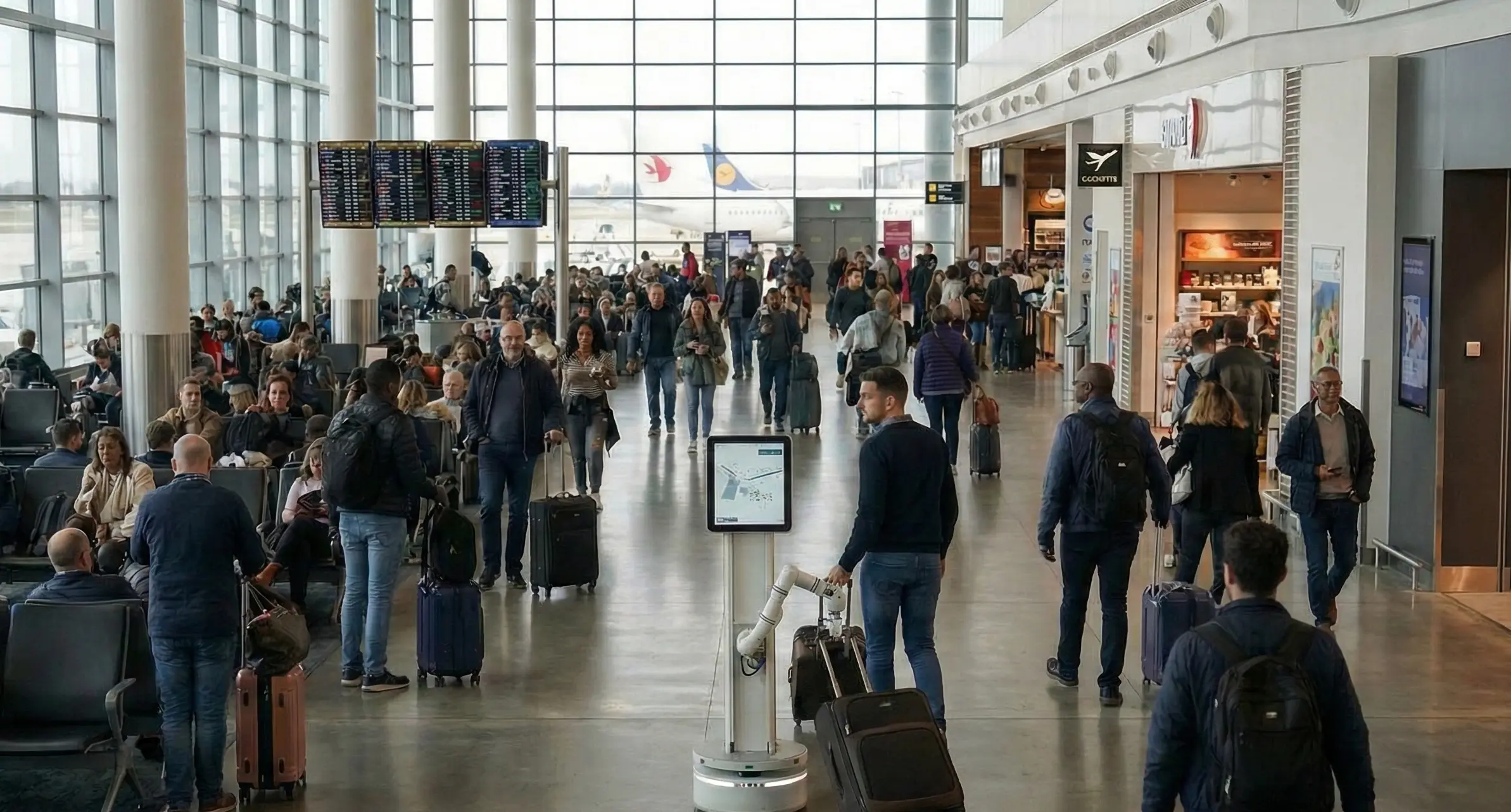
OpenDroids autonomous patrol robot moving through a busy terminal concourse

Terminal Coverage

Security · Cleaning · Gate Ops

One RaaS platform across your terminal

Zero Security Gaps

Our autonomous patrol robots continuously patrol perimeter, terminals and restricted areas, there are no shift changes, no fatigue, no blind spots.

Always-On Operations

Our robots work around the clock, being ready to depart for the first flight in the morning and the last flight in the evening, without the overhead of scheduling or overtime.

Labor Cost Cut Without Layoffs

Reassign personnel to more judgmental positions. One OpenDroids cleaning robot covers what 4 staff members do at 1/10 of the cost of all-in cleaning staff/per month.

Fully Managed, Zero Downtime Risk

We own the hardware, perform all software updates, and send technicians. Your ops team never touches the machine, this is where we come in!

Three Environments. One Autonomous Platform.

Security patrols, cleaning operations, and gate-side assists are each strategically placed in areas where airport labor costs are the highest.

Terminal Concourse

Terminal Concourse Autonomous Security Patrol
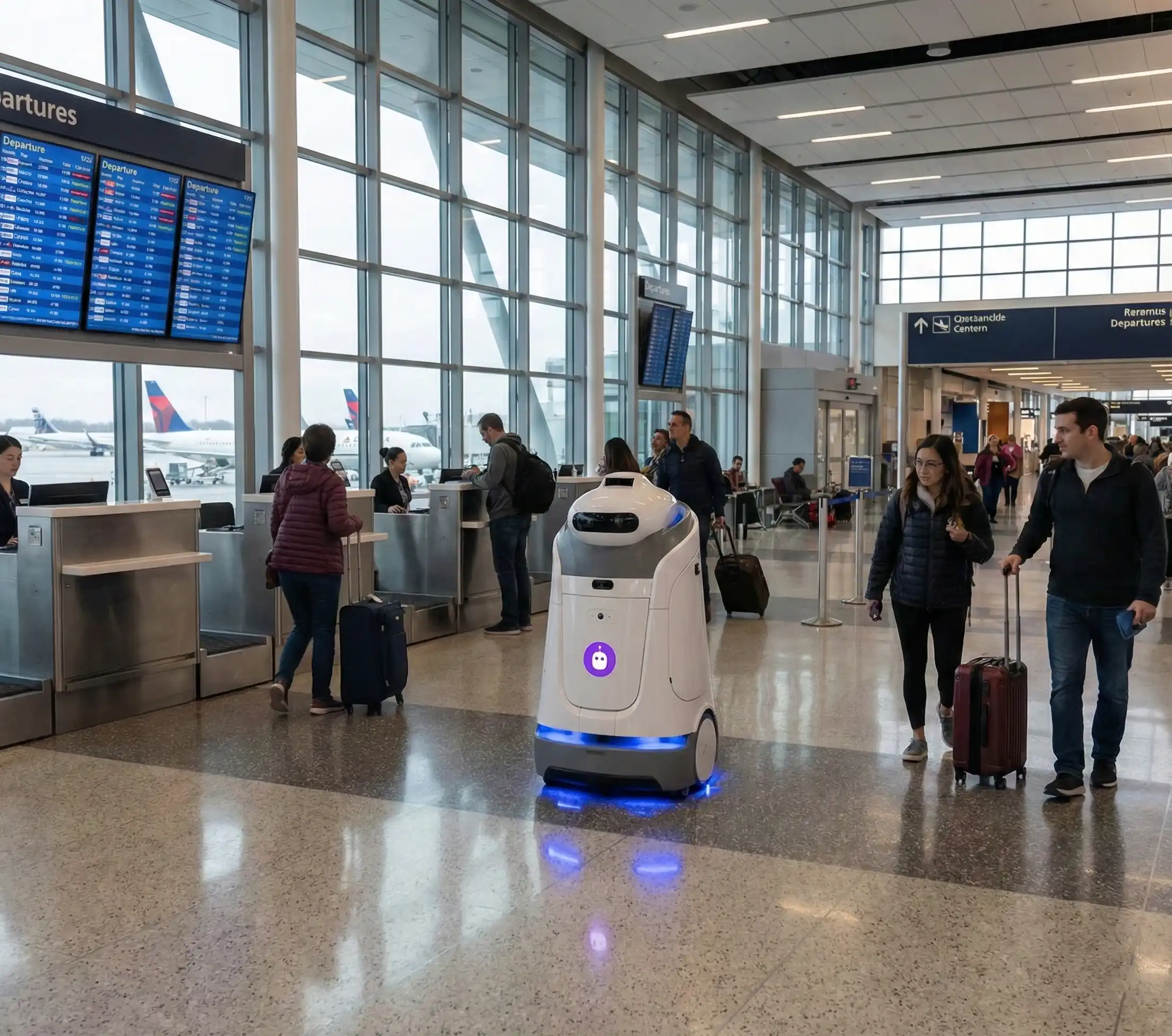
OpenDroids patrol robot moving through a wide terminal corridor at night

Airport security officers are often stretched too thin. Staff shortages can even lead to incidents happening during patrol gaps - Mainly when the airport is busiest overnight or during travel congestion times when foot traffic doubles and the risk of incidents peaks. The AI security patrol robot from OpenDroids is capable of doing continuous 360 thermal and visible-light surveillance across your concourse, restricted access corridors, and perimeter fence lines. It not only detects abnormalities in real time and immediately sends an alert to human security staff but also works as a continuous visible deterrent that passive cameras don't compare to.

  • Uninterrupted perimeter and concourse coverage no patrol lapses between 22:00 and 05:00
  • Timely abnormality notifications sent to security dashboard and smartphones
  • Labor in patrol hours plateaus at 40-60% reduction per terminal
  • Capable of AODB integration the robot brains live flight data and terminal status
Landside & Airside

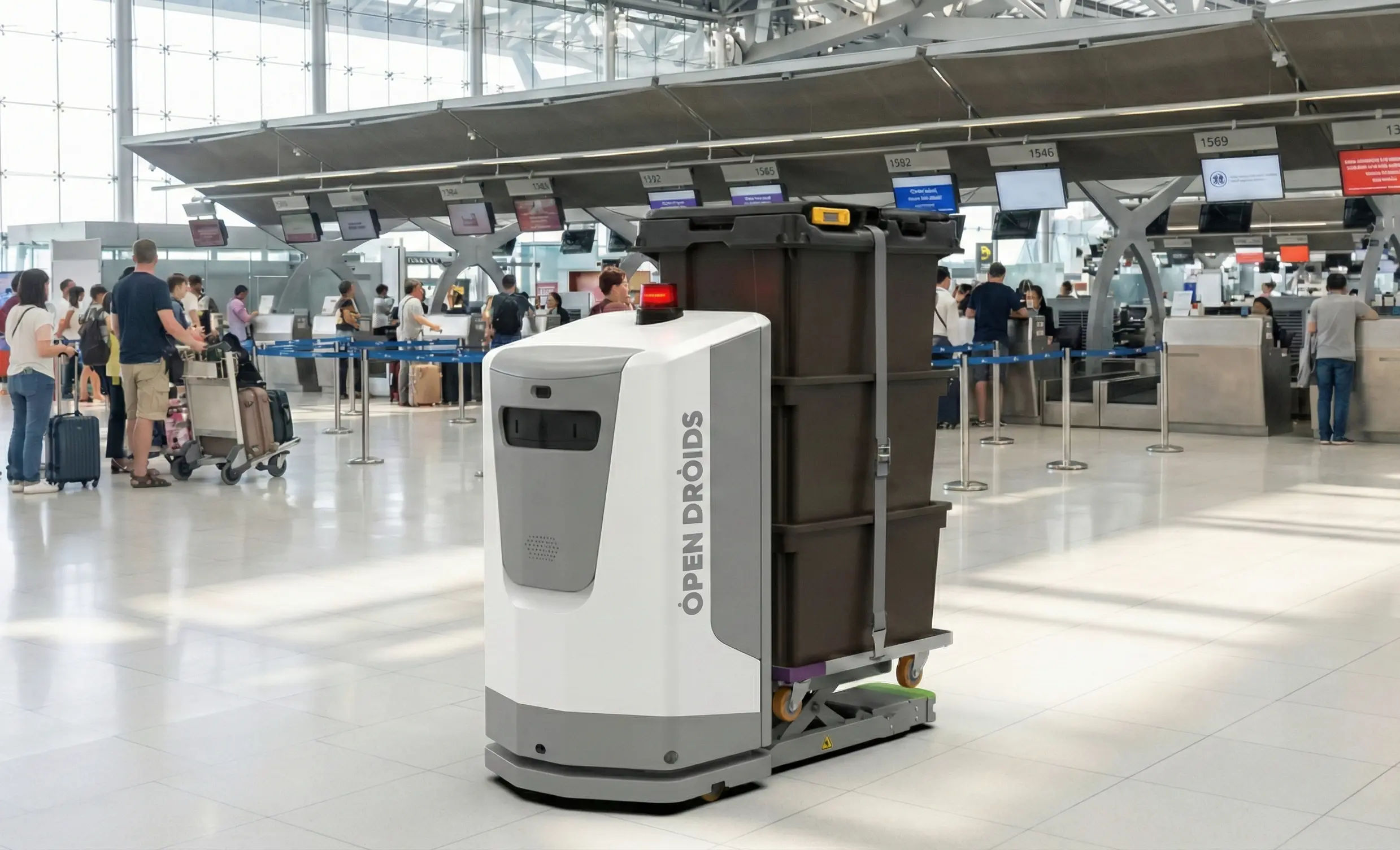
Landside & Airside Autonomous Cleaning Operations

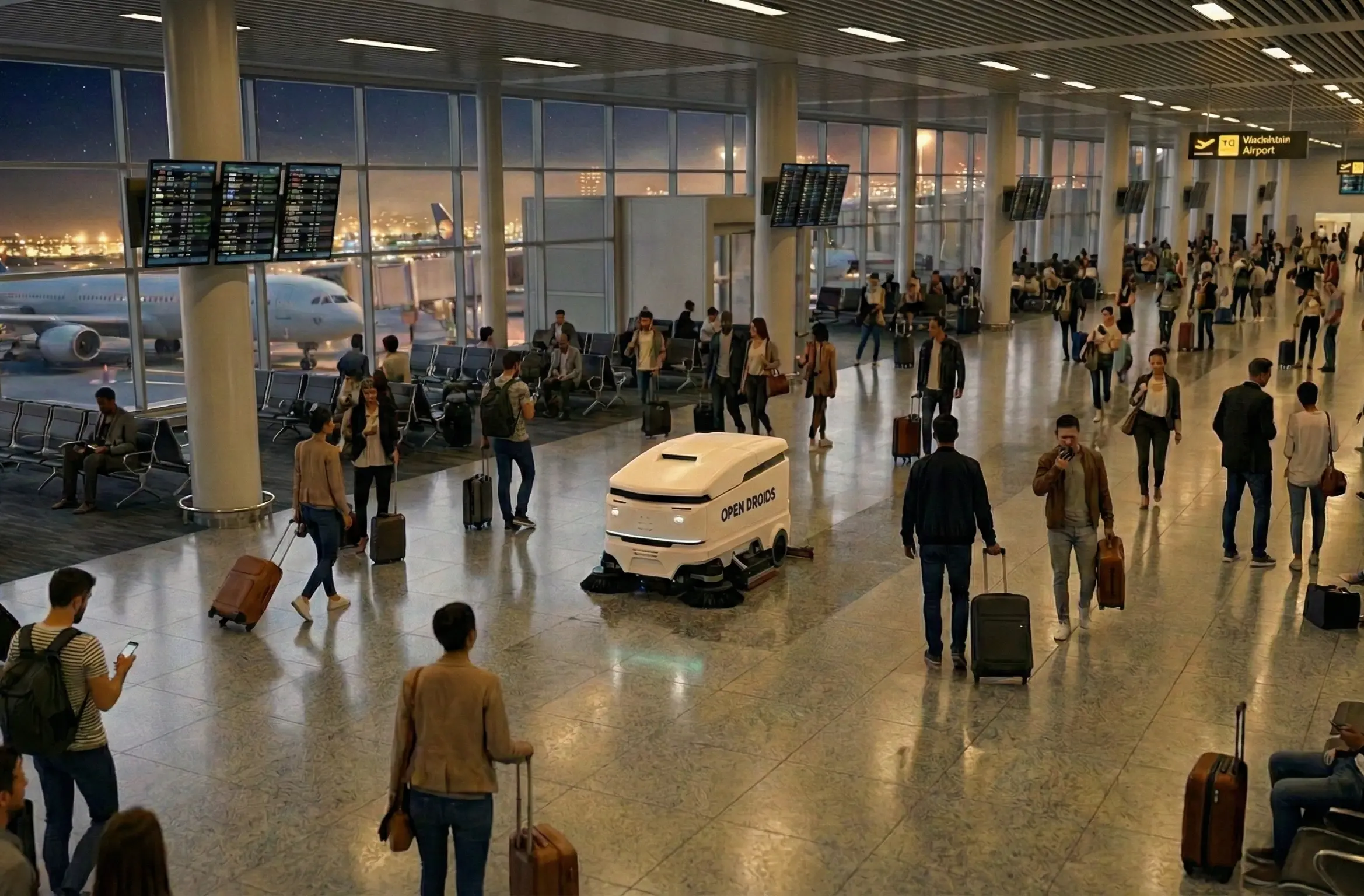
OpenDroids cleaning robot in a bright gate lounge with passengers seated nearby

Gate lounges, restroom corridors, and departure halls quickly get dirty in ways that are directly dependent on when flights arrive and depart the busiest periods are between waves and the shortest period for rapid cleaning is during delays. Typical cleaning involves staff members having to manually look at the gate status and then be sent out again. OpenDroids' cleaner robot connects itself to gate scheduling data and changes its position automatically between top-priority areas as people get on and off the flights. The robot is so proactive that it doesn't even have to wait for someone to assign it - it already knows where the next mess is going to be.

  • Brushes up to 10,000 sq ft per cleaning session with one single robot (equivalent to 4 personnel in routine floor coverage replacement)
  • The expected monthly labor cost savings is $23,100 while $3,600 are the maintenance costs (10,000 sq ft facility baseline)
  • Breakeven as soon as 5 months on a 20-month financing term
  • Works while passengers are in the terminal no after-hours scheduling is needed

Gate-Side

Gate-Side Last-Meter Delivery & Passenger Assist

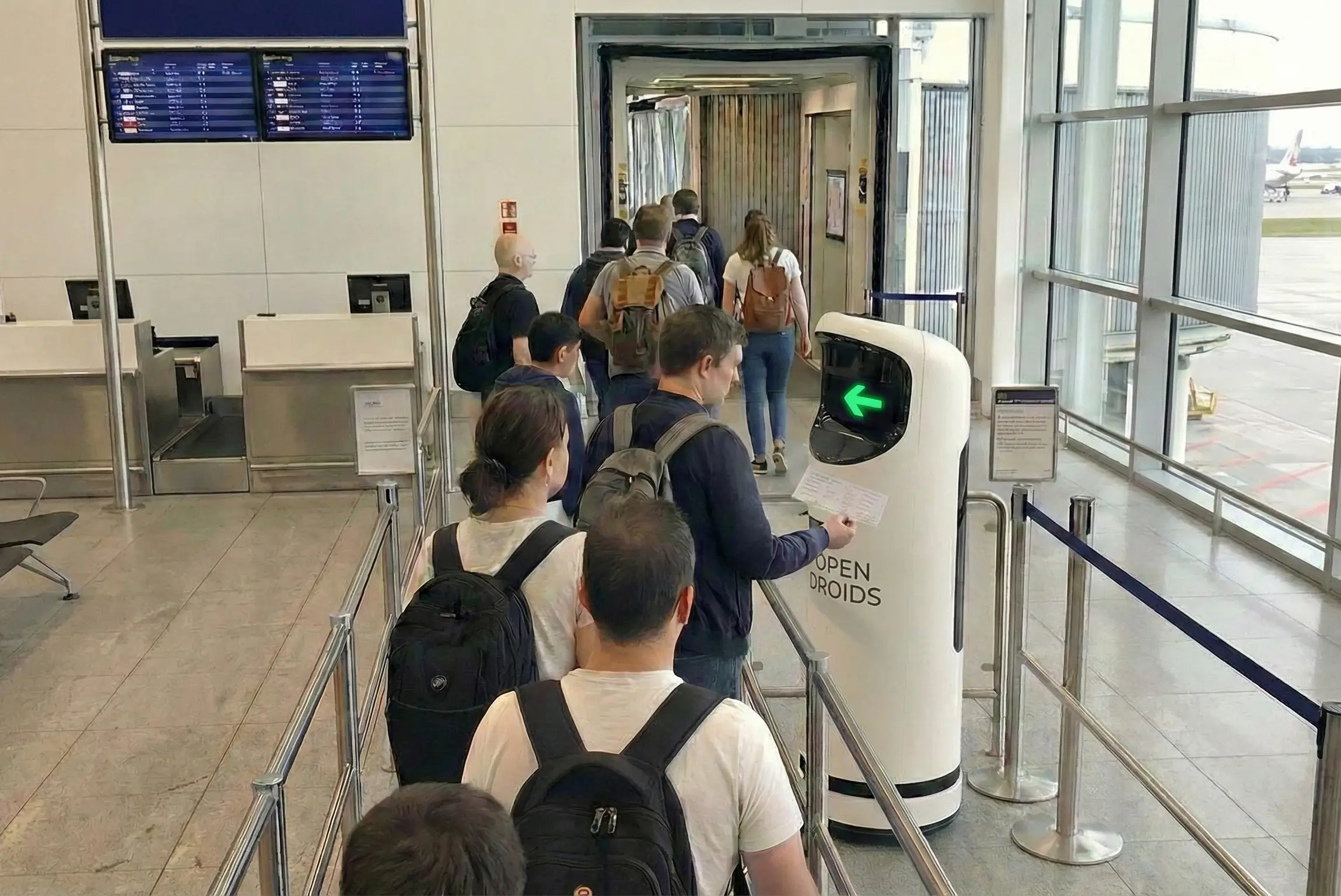
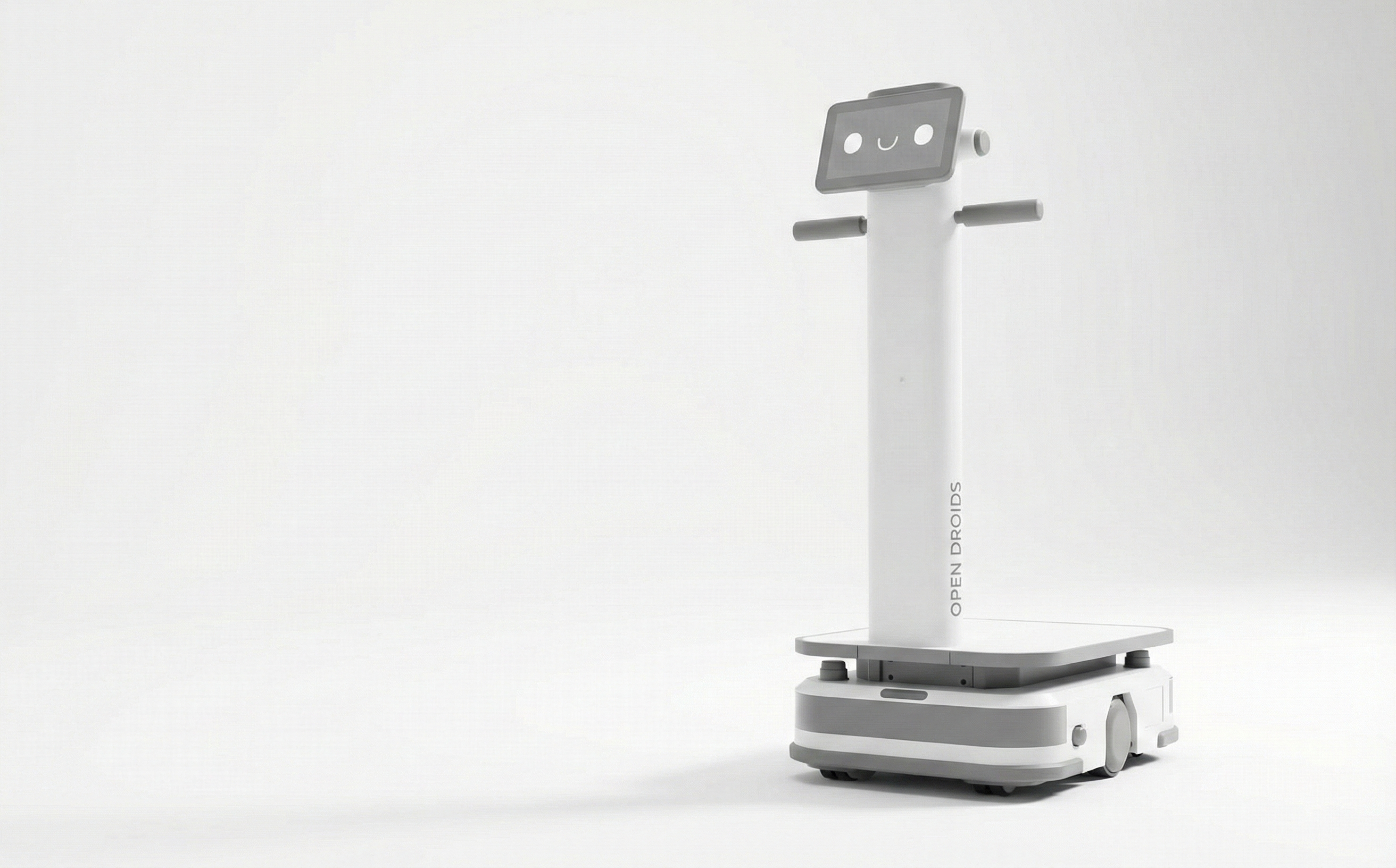
OpenDroids passenger assist robot facing a traveler with luggage at a terminal gate

Today human escorts or runners are the methods used to meet late-connection passengers, unaccompanied minors, and travelers who must have mobility support this is done at a significant cost and without consistency in the time of response. OpenDroids' gate-side delivery and passenger assist robot can recognize and answer to wayfinding queries in over 40 languages, it will also escort a passenger independently to the gate and bring items (boarding passes, amenity kits, F&B orders) directly to the passenger seat. It will give the staff free hands to deal with the few moments where human judgment is absolutely necessary.

  • More than 40 languages supported interactive touchscreen for wayfinding and queries
  • Autonomous gate-to-gate escort with real-time obstacle avoidance
  • High-volume corridors have the potential of re-capturing 1.5 staff FTE per unit
  • CSAT impact: passengers acknowledge higher satisfaction with proactive assist availability vs. having to look for staff.

ROI

The Financial Case

Airport labor costs represent 35-45% of total operating expenses for US terminal operators and that figure has climbed every year since 2019.

$14,784/mo

Terminal cleaning: 1 robot replaces 4 staff (15 @ $22/hr baseline) est. savings vs. current labor

$8,400/mo

Waste collection: 1 robot replaces 2.5 staff (8 @ $20/hr) est. recaptured labor

$5,040/mo

Passenger assist: 1 robot replaces 1.5 staff (5 @ $25/hr) est. recaptured labor

$71,700/mo

Net monthly savings (10,000 sq ft facility) after automation EMI + maintenance

310.4%

Estimated ROI over 20-month financing term

5 months

Breakeven point on baseline facility model

MetricBefore OpenDroidsAfter OpenDroids
Monthly Labor Cost$98,400~$26,700
Coverage Hours (Cleaning)Shift-dependent24/7, automated
Security Patrol GapsOvernight & peakZero gaps
Staff FTEs on Routine Tasks28+~8–10 (redeployed)
Monthly Automation Cost$0$26,700 (EMI + maint)
Net Monthly Savings$71,700

Most airport operators reach positive ROI inside 5 months. Book a demo and we'll model your exact facility no obligation. Calculate your ROI →

Source: OpenDroids ROI Model, Airport & Stations vertical, 20-month financing term, 10,000 sq ft facility baseline. Actual results vary by facility size, labor rates, and operational configuration. ROI figures are estimates, not guarantees.

Trust & Standards

Built for Dense Passenger Environments

As deployed across airport and transit environments in the US and Europe. Operational across major hub and regional terminal networks.

  • ISO 13482 compliant for personal care / public-space robots
  • Multi-layer LiDAR redundancy + visual SLAM for crowd-safe navigation
  • E-stop protocols for safe operation in dense passenger environments
  • AODB + FIDS integration ready (live flight data awareness)

World Economic Forum Quorum member. OpenDroids builds to the safety and integration standards terminal operators and insurers expect in high-traffic public spaces.

OpenDroids robot deployed in an airport terminal environment

Also explore robotics in these industries

Airport automation is one piece of a broader robotics stack. Hospitality lounges and healthcare facilities share the same deployment model.

For Operators & Entrepreneurs

Start Your Robotics Business

Launch a robotics services business in aviation and adjacent verticals with OpenDroids playbooks, sourcing support, and go to market guidance.

View the business playbook →

FAQ

Questions Terminal Operators Ask

How much does a robot for airport automation cost?

OpenDroids operates on a Robotics as a Service (RaaS) model there's no upfront capital expenditure. You pay a monthly service fee that covers the hardware, all software updates, maintenance, and 24/7 remote support. For a 10,000 sq ft terminal facility, the automation cost runs approximately $26,700 per month, against labor savings of nearly $98,400 at baseline a net positive of $71,700/mo. Exact pricing depends on robot count, facility size, and use case mix. Book a demo and we'll model it for your site.

Do airport robots replace security and cleaning staff?

Not wholesale they redeploy them. OpenDroids robots handle high-volume, repetitive coverage tasks: routine patrol laps, floor cleaning, wayfinding queries. Your staff get reassigned to roles that actually need human judgment incident response, customer escalations, gate management. Most operators reduce routine-task headcount through attrition, not layoffs, while improving coverage quality across the board.

How long does it take to deploy a robot in an airport terminal?

OpenDroids guarantees deployment within 30 days from contract signature. That includes hardware delivery, on-site mapping and calibration, AODB/FIDS integration, and staff orientation. Our team manages the full installation your operations team doesn't need to allocate engineering resources to the rollout.

What types of airport environments use autonomous robots?

Terminals of all sizes — from single-concourse regional airports to multi-terminal international hubs. Common deployment zones include landside and airside concourses, gate lounges, baggage claim halls, security checkpoint approaches, restricted perimeter corridors, and check-in zones. Robots are also increasingly deployed in adjacent facilities: transit stations, rail terminals, and intermodal hubs. See also: robots for hospitality for hotel and lounge environments.

Is there a long-term contract, or can I cancel?

OpenDroids offers flexible RaaS agreements typically structured on 20 month financing terms with clearly defined exit provisions. Unlike capex hardware purchases, you're not holding depreciated equipment if your operational needs change. Contact us to discuss contract terms we'll walk you through what flexibility looks like for your facility size and robot count.

Book a Demo

Ready to Automate Your Terminal?

OpenDroids deploys in 30 days and handles hardware, maintenance, and support start with a free demo.

Talk to a Robotics Specialist

No commitment required. No capex. Just a clear look at what automation does for your specific terminal, built on real deployment data.