Last-Mile Delivery · RaaS

Take the Last Mile Back In-House With Robots For Delivery.

We do the last 1/4 mile for a flat monthly fee (no per order cut). you can do most of it at your kitchen or store. Put an end to the delivery tax on all orders.

53%

Of Total Shipping Cost Is Last Mile (GoBolt, 2026)

15–30%

Listed Marketplace Commission (IRC, 2025)

55–70%

Per-Delivery Cost Cut vs. Human Courier (Industry, 2026)

30 Days

Standard Deployment Timeline

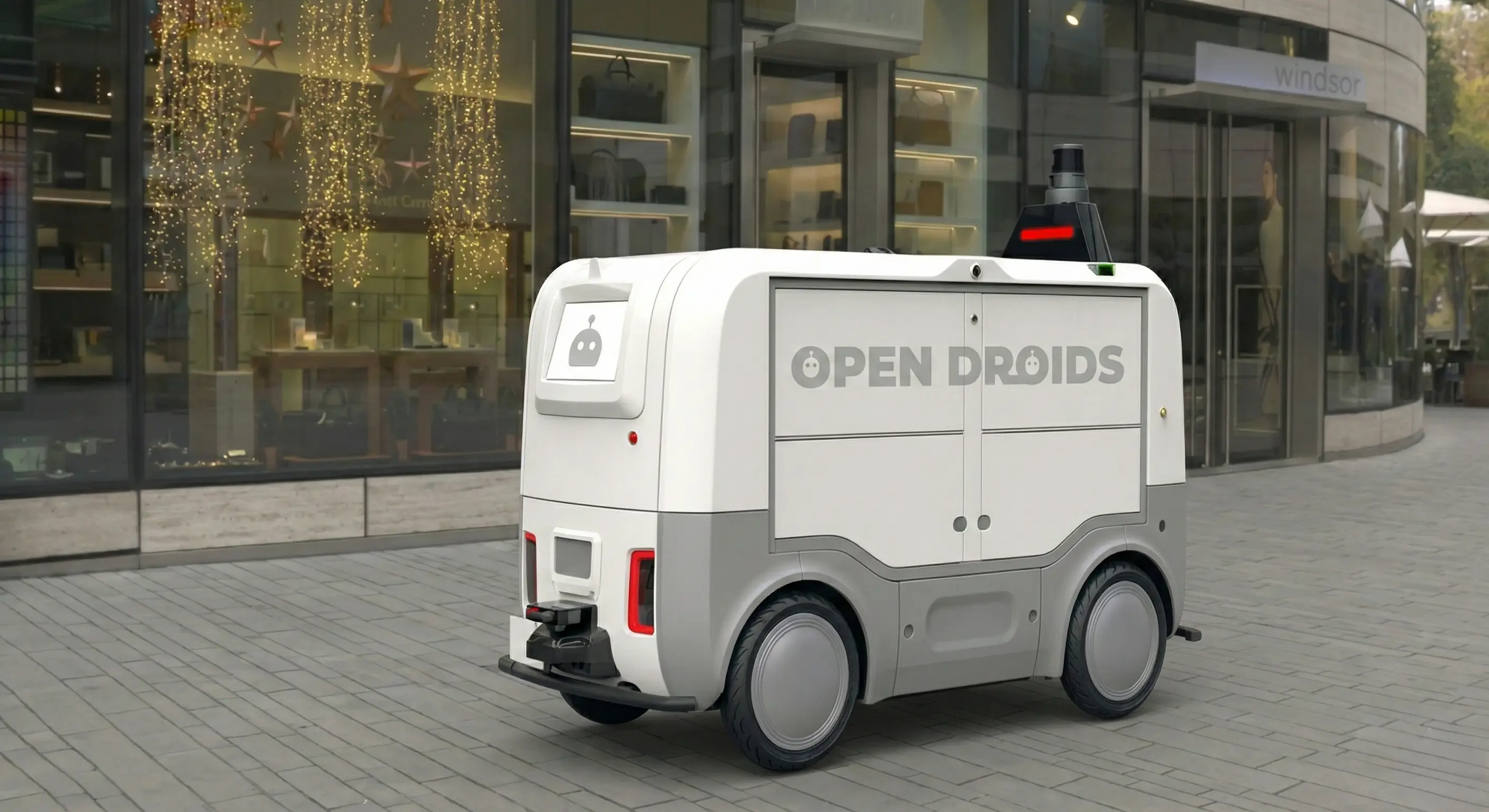
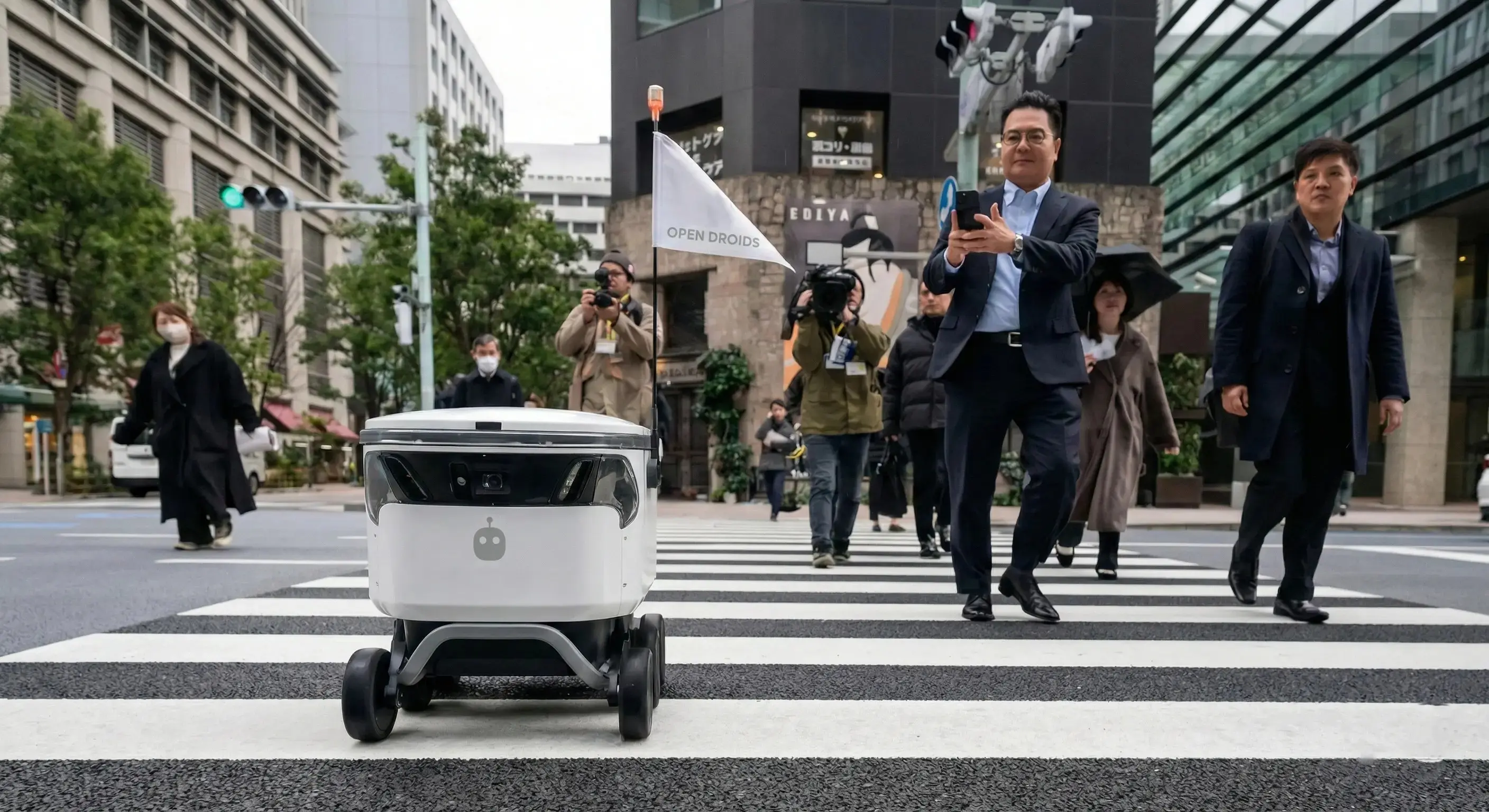
OpenDroids sidewalk delivery robot on an urban route

The Golden Mile

1–2 mi

where most profitable delivery orders originate

No Commission, Ever

No per order Fleet Access Fees, only a flat fee. If you're making $10,000/month in sales - your marketplace commission is 25%, which is $2,500 gone, but our flat-fee model isn't dependent on the volume you make.

The Driver That Always Shows Up

No call out, no rain delay no shift gaps. The fleet is available when your kitchen or store is open including 11pm on Friday.

Your Customer, Your Data

Third party apps retain what people purchase, their history, and their preferences. That data is yours with OpenDroids, the basis for direct repeat orders, not anonymous marketplace traffic.

A Rolling Billboard, Not a Paper Bag

Every ride with the robot will feature your logo in your neighborhood a delivery-app bag can't offer that visibility.

Three Environments. One Last Mile Fleet.

Commission bleed and driver gaps are the two commission killers that take the biggest bite in the short-haul delivery routes involving restaurants, retail micro-market and hotel or campus concierge.

Restaurant

Restaurant Hyperlocal Delivery
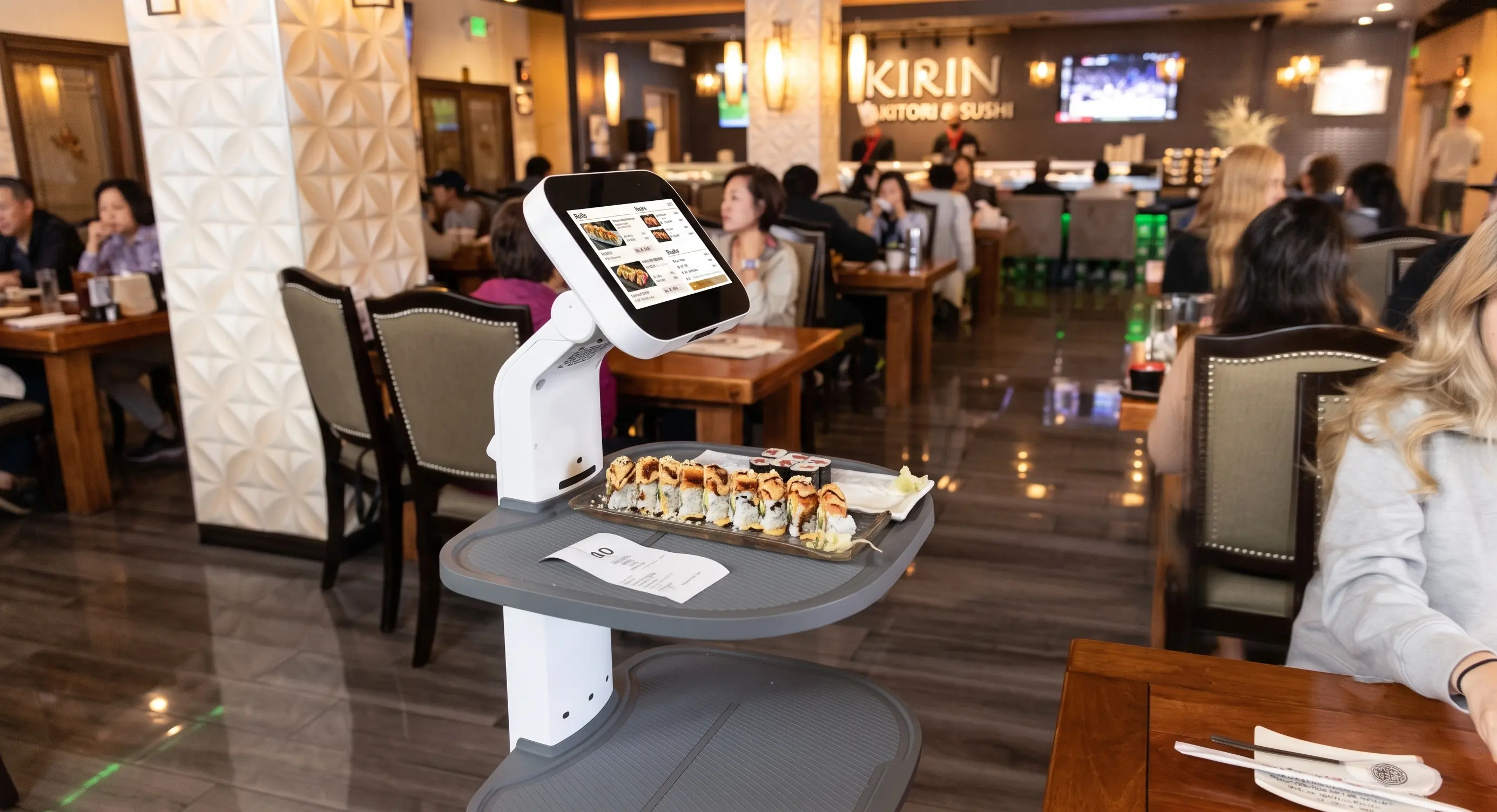
OpenDroids delivery robot crossing a crosswalk outside a restaurant storefront at dusk

In today's day and age, most restaurant delivery is through Door Dash, Uber Eats or Grubhub, and the commission in plans is listed at 15-30% of the order; the all-in cost of the order after fees, promos and payment processing is generally 30-40% (Independent Restaurant Coalition, 2025). That commission can wipe out a restaurant's entire profit on the plate, on a typical net margin of 3–5%. Most profitable delivery orders come within 1-2 miles of the kitchen, which sidewalk robots are designed for. We refer to it as the Golden Mile 80% of the profitable orders are from within a 2-mile radius.

  • Removes a 15–30% fee on orders that the robot executes
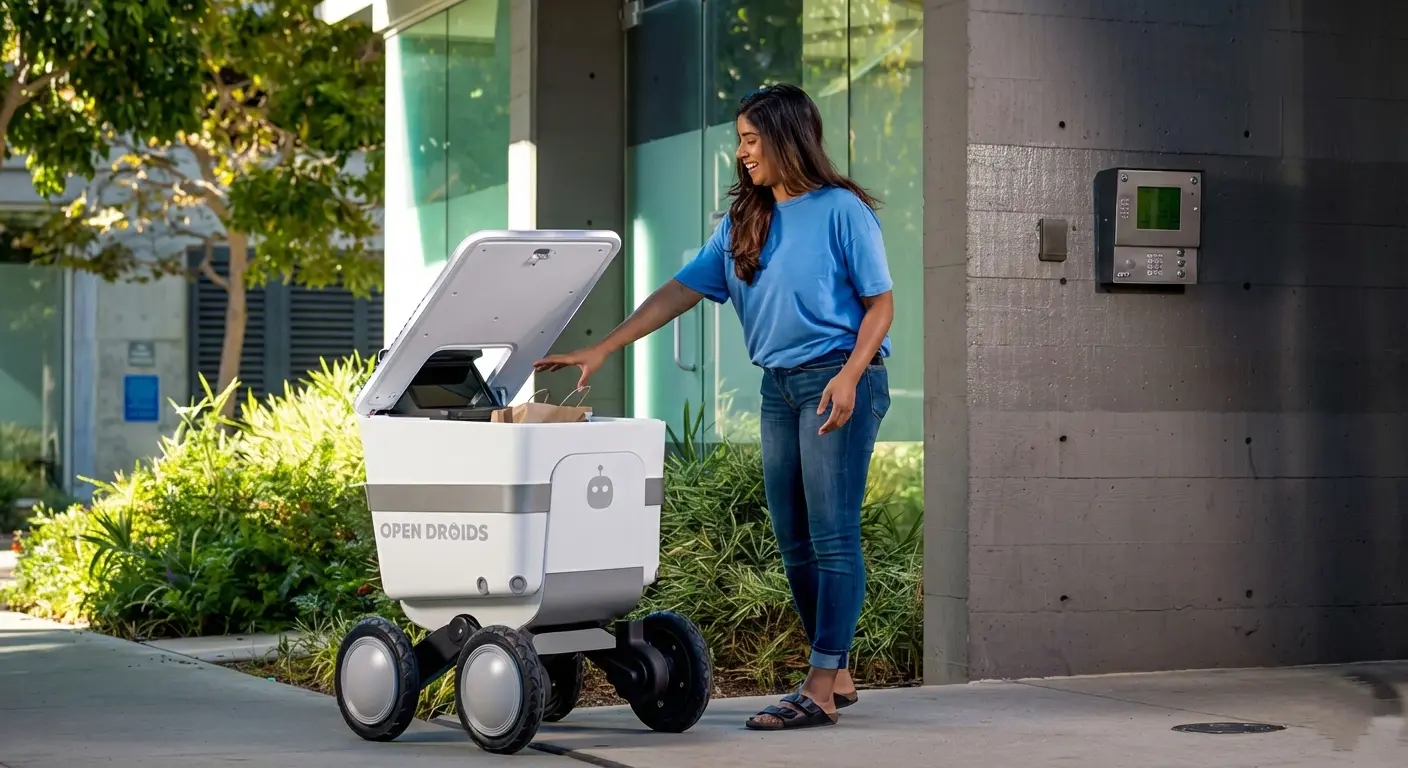
  • Sealed cargo bay, stays locked until the customer unlocks with his/her cell phone, addresses #1 delivery complaint (tampered or cold food)
  • Instead of paying a 2-ton car to do 5 blocks, own it and drive it yourself.
Retail

Retail & Micro-Market Delivery

OpenDroids delivery robot curbside outside a micro-market storefront

Small-format retail and micro-market operators face the same commission bleed as restaurants when they list on third-party marketplaces for local delivery — plus they don't own the delivery relationship or the customer contact info. OpenDroids acts like a utility provider, not a landlord taking a cut of every sale.

  • No monthly Fleet Access Fee, which doesn't depend on the number of orders like commission does.
  • Current industry specs: 8-15 kg payload, 3-8 km typical service radius on current sidewalk platforms.
  • Maintains customer relationships and order information within the company for repeat business

Campus

Hotel & Campus Concierge Delivery

OpenDroids delivery robot navigating a landscaped campus or hotel courtyard path

Delivering short, repetitive point-to-point service such as room service, campus to dining is costly to staff for low margin, low volume trips, which is needed by both hospitality and food-service operators. This workflow is not experimental, but rather has already been used in 65+ U.S. universities with sidewalk robot platforms.

  • Industry fleets typically run 50-100 deliveries per day per unit depending on route length (Fdata, 2026)
  • Covers shifts a single staffer can't without adding headcount for short-hop runs
  • All weather fleet keeps rolling when human drivers won't show

ROI

A Utility, Not a Partner.

Labor alone accounts for roughly 50% of last-mile delivery expense, with local delivery couriers averaging $16.74/hour and delivery drivers averaging $15.12/hour nationally (U.S. Bureau of Labor Statistics, via Dropoff, 2026) before fuel, insurance, or marketplace commission are added.

15–30%

Listed marketplace commission removed on robot fulfilled orders

55–70%

Estimated per delivery cost reduction vs. human courier in dense areas

$16.74/hr

Average local courier wage before fuel, insurance, or commission (BLS, 2026)

30–40%

Effective all in marketplace cost once fees and promos are counted

MetricBefore OpenDroidsAfter OpenDroidsDifference
Per-order cost15–30% commission / orderFlat monthly Fleet Access FeePer-order % removed
Labor & vehicleDriver wage + fuel + insuranceElectricity + maintenanceFixed operating cost
Customer relationshipAnonymous marketplace customerOwned contact & order historyDirect repeat-order channel

Big delivery apps act like a landlord, taking a cut of every sale. We act like a utility provider run your own numbers with our free ROI calculator. Calculate your ROI →

Figures shown are based on published industry benchmarks (GoBolt, Independent Restaurant Coalition, BLS, and fleet operator data). Actual outcomes vary by order volume, route density, and local labor rates. Estimates are not guarantees.

Trust & Standards

Proven Category. Purpose Built Deployment.

Sidewalk delivery robots have completed 10+ million autonomous deliveries industry-wide as of 2026 (Starship Technologies), and over 61% of consumers say they'd pay a premium for robot-delivered orders (industry consumer research, 2026) useful context that this technology is established, not experimental.

  • 30-day deployment from signed agreement to live fleet
  • Flat Fleet Access Fee no per-order commission structure
  • Local permitting confirmed before any robot goes live in your service area
  • Sealed cargo bay with phone-unlock handoff for tamper-resistant delivery
OpenDroids delivery robot with sealed cargo bay for secure handoff

Also explore robotics in these industries

Last-mile delivery connects directly with retail and hospitality operations. Explore adjacent deployments.

For Operators & Entrepreneurs

Start Your Delivery Robot Business

Launch a recurring-revenue delivery robotics business with OpenDroids playbooks, deployment support, and territory partner programs.

View the business playbook →

FAQ

Questions Delivery Operators Ask

How much does a delivery robot cost for a restaurant or store?

Costs vary by fleet size and service area, and OpenDroids prices per deployment rather than a public flat rate. It's structured as a monthly Fleet Access Fee, not a per-order commission that's the main cost difference from a marketplace app. Your specific quote is confirmed during site assessment.

Do delivery robots actually save restaurants money vs. DoorDash or Uber Eats?

Third-party marketplace commission runs 15–30% by plan tier, with real effective cost often reaching 30–40% of the order once fees and promotions are included (Independent Restaurant Coalition, 2025). A flat-fee robot model removes that per-order percentage, though savings depend on order volume and route density the ROI math is specific to each location.

How far can a delivery robot travel on one trip?

Current sidewalk delivery robot platforms typically operate in an 8–15 kg payload range with a 3–8 km service radius, with some platforms rated up to 15 km on a single charge depending on load (industry specs, 2026). Most profitable restaurant and retail delivery orders fall within a 1–2 mile radius of the store anyway.

Are sidewalk delivery robots legal and safe around pedestrians?

Regulation varies by city some US and European municipalities permit them under specific speed and weight limits, while a small number of cities have restricted or banned them. OpenDroids confirms local permitting as part of the 30-day deployment process before any robot goes live in a service area.

How long does it take to launch a robot delivery fleet?

OpenDroids' standard deployment timeline is 30 days from signed agreement to live fleet, covering hardware, routing setup, and staff onboarding. Delivery specific site requirements (sidewalk coverage, permitting) are assessed during your discovery call.

Book a Demo

Stop Paying a Delivery Tax on Every Order

Marketplace apps take 15–30% of every order before you see a dollar. OpenDroids replaces that with a flat monthly fee and a fleet that never calls out sick.

No commitment. We'll map the exact commission you're paying today against a flat-fee robot fleet for your location.

No commitment. We'll show you the exact ROI for your location.